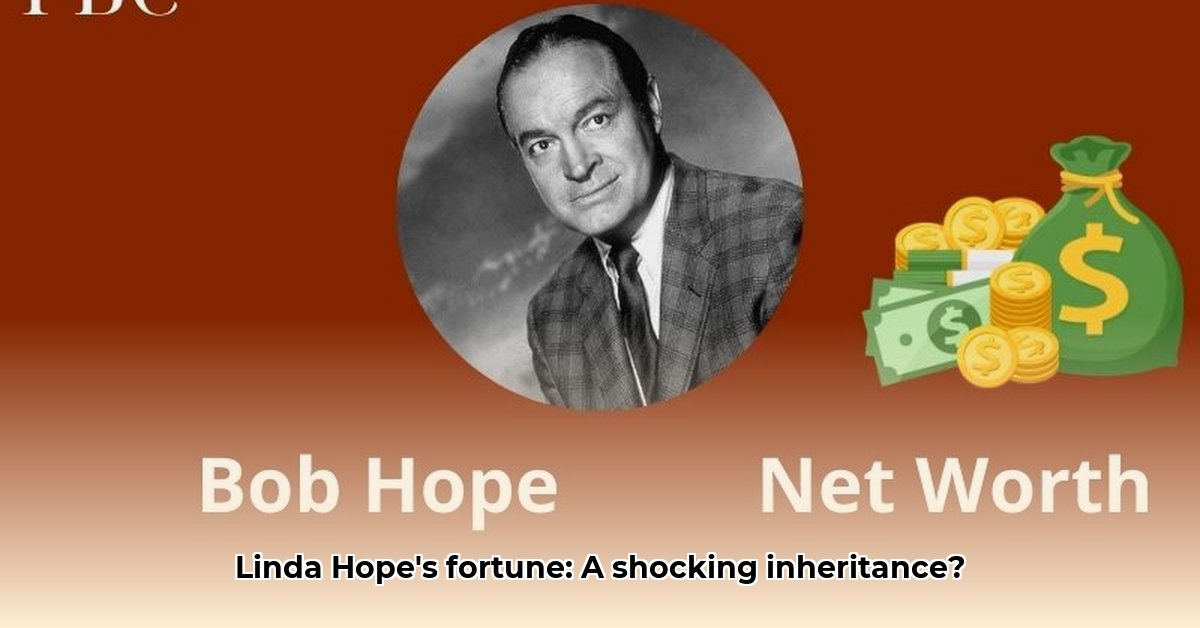
The names Bob and Dolores Hope evoke images of Hollywood glamour and immense wealth. But the distribution of their substantial fortune after their deaths presents a fascinating case study in high-net-worth estate planning. This article delves into the complexities surrounding Dolores Hope's $200 million estate, exploring her children's inheritance – including Linda Hope's share – and examining the valuable lessons for effective estate planning.
Dolores Hope's Legacy: A $200 Million Estate
Dolores Hope's passing in 2011 left behind an estimated $200 million estate, a diverse portfolio encompassing prime real estate, significant investments, and other assets meticulously accumulated over decades. While a substantial portion was allocated to her four children, ensuring their financial future, significant donations also benefited Cedars-Sinai Medical Center and various charities, reflecting the Hopes' enduring commitment to philanthropy. However, the precise allocation among her children remains undisclosed, respecting the family's preference for privacy. This underscores the importance of balancing the needs of family members with wider philanthropic goals in estate planning. How could such a complex distribution be managed effectively for maximum impact?
Linda Hope's Inheritance: A Private Affair
Determining Linda Hope's exact net worth proves challenging, and understandably so. The Hope family's commitment to privacy means the specifics of Dolores's will remain confidential. Complex trust structures and legal arrangements commonly employed for high-profile estates often remain outside the public domain. While a precise figure remains elusive, it's safe to assume Linda, along with her siblings, inherited a considerable portion of the estate. This privacy reflects a strategic approach to managing high-net-worth wealth and protecting family well-being from undue public scrutiny. What are the most effective strategies for maintaining privacy in high-net-worth estate planning?
The Bob Hope Estate: A Difficult Valuation
Assessing the total value of Bob Hope's estate adds another layer of complexity. Reported figures vary significantly across different sources, reflecting the inherent difficulties in valuing a vast and diverse portfolio. Fluctuations in real estate values, the volatile nature of investments, and the subjective valuation of collections contribute to these discrepancies. This highlights the importance of accurate and detailed asset documentation in estate planning, no matter the scale of the assets. What measures can ensure the most accurate possible valuation of a complex estate?
High-Net-Worth Estate Planning: Key Lessons from the Hope Estate
The Hope family's experience provides valuable insights for high-net-worth estate planning.
Comprehensive Planning: Meticulous planning, including detailed wills, trusts, and power of attorney documents, is crucial to minimize potential disputes and ensure wishes are carried out precisely. This requires expertise in estate law and financial management.
Proactive Tax Strategies: High-net-worth estates face significant tax liabilities. Proactive tax planning with qualified professionals can considerably reduce these liabilities and maximize the inheritance received by beneficiaries. What are the most effective tax strategies for high-net-worth estates?
Strategic Philanthropy: The Hope's substantial charitable contributions showcase the enduring benefits of integrating philanthropy into estate planning. It not only supports worthy causes but can also provide significant tax advantages.
Privacy Protection: The Hope's measured approach to managing public perception highlights the importance of strategic communication. Expert counsel can protect family well-being and reputation.
Managing Risk in High-Net-Worth Estate Planning
High-net-worth estate planning involves inherent risks.
| Risk Factor | Likelihood | Impact | Mitigation Strategy |
|---|---|---|---|
| Legal Challenges to the Will | Low | Very High | Engage top-tier legal counsel throughout the process. |
| Asset Mismanagement | Moderate | High | Hire experienced financial advisors; diversify assets prudently. |
| Inefficient Charitable Giving | Low | Moderate | Develop clear guidelines; monitor donations for maximum impact. |
| Public Scrutiny of Distribution | Moderate | Low | Carefully manage public communication; prioritize discretion. |
The Hope family's experience serves as a powerful illustration: wealth accumulation is distinct from its careful distribution. While specific details of Linda Hope's inheritance remain private, the lessons from their extensive estate are invaluable and broadly applicable. Their story underscores the critical need for expert guidance in high-net-worth estate planning.
Dolores Hope's Estate: Unpacking a Legacy & Effective Planning Strategies
Key Takeaways:
- The Hope family's estate planning showcases the complexities inherent in managing significant wealth.
- Thorough documentation and clear beneficiary designations are indispensable.
- Proactive tax planning minimizes potential financial burdens on heirs.
- Selecting competent fiduciaries ensures efficient asset management.
- Open communication among family members prevents future disputes.
Dolores Hope's $200 Million Legacy: A Complex Distribution
Dolores Hope's $200 million estate, encompassing real estate, investments, and other assets, was distributed among beneficiaries including her children and various charities. However, the precise allocation remains private, a testament to the family's preference for discretion. This highlights the importance of detailed planning to ensure the successful and equitable distribution of a substantial estate.
Linda Hope's Inheritance: A Case Study in Discretion
While the exact amount inherited by Linda Hope remains undisclosed, the overall family wealth provides context. Her inheritance, along with her siblings’, showcases the need for sophisticated estate planning to protect assets while respecting family privacy.
Navigating the Bob Hope Estate: Valuing Complex Assets
The challenges of valuing Bob Hope's estate, with its diverse asset classes, underscore the need for precise documentation in estate planning. Varied reported figures highlight the difficulties in assessing intellectual property and other complex assets, emphasizing the need for professional valuation and legal counsel.
Essential Lessons for High-Net-Worth Estate Planning
The Hope family’s legacy offers valuable guidance:
- Comprehensive Documentation: Detailed wills, trusts, and power-of-attorney documents prevent ambiguity and potential conflicts.
- Proactive Tax Planning: Engaging tax specialists minimizes tax liabilities and ensures efficient asset distribution.
- Competent Fiduciaries: Choosing qualified executors and trustees ensures effective estate management.
- Open Family Communication: Open discussions about inheritance expectations minimize misunderstandings and potential disputes.
Planning an estate of significant size demands a multi-faceted approach. Careful consideration of all assets, beneficiaries, and tax implications is crucial. Seeking expert counsel from estate planning and tax law professionals is essential for creating a well-structured and legally sound plan.